As electricity prices keep going up in Nigeria, more people are watching how much power their appliances use. For most homes, air conditioners are among the biggest reasons for high electricity bills, especially when the weather is hot. If you're planning to buy a new AC, you'll likely face a common question: Should you go for a cheaper non-inverter AC or spend more on an inverter AC? The answer depends on your usage pattern, electricity source, and long-term budget. Understanding the differences can help you avoid paying more than necessary for electricity and fuel.
Understanding the Difference
The key difference between inverter and non-inverter air conditioners lies in how they control the compressor—the component responsible for cooling.
Non-Inverter ACs
A non-inverter AC operates using a simple on-and-off cycle. When the room temperature rises above your selected setting, the compressor starts and runs at full power. Once the desired temperature is reached, the compressor shuts off completely. As the room warms up again, the compressor restarts at full capacity. This continuous cycle of stopping and restarting is effective, but it can consume more electricity over time and create higher startup current demands.
Inverter ACs
An inverter AC uses a variable-speed compressor. Instead of shutting down completely once it reaches the desired temperature, the compressor slows down and runs at a lower speed to maintain a consistent room temperature. Because the compressor adjusts its speed based on cooling demand, inverter ACs generally consume less electricity and provide more stable cooling.
How Does This Affect Your Prepaid Meter?
Prepaid meters charge for the total energy consumed, measured in kilowatt-hours (kWh). While inverter ACs do not reduce costs simply because they have lower startup currents, they often use less electricity overall because they spend much of their operating time running at reduced power rather than repeatedly starting and stopping at full capacity. The actual savings depend on several factors:
- Room size
- Insulation quality
- Outdoor temperature
- AC capacity
- Temperature settings
- Daily usage hours
- Brand efficiency
However, in many Nigerian homes, inverter ACs typically consume 20% to 50% less electricity than comparable non-inverter models under similar conditions.
A Realistic Example
Let's compare two typical 1.5 HP air conditioners operating for 8 hours daily over 30 days. Assumptions:
- Electricity tariff: ₦225 per kWh
- Warm Nigerian climate
- Average household usage
- Properly sized AC unit
Non-Inverter AC
A typical 1.5 HP non-inverter AC may consume approximately:
- Average daily consumption: 7–10 kWh
- Monthly consumption: 210–300 kWh
Estimated monthly electricity cost:₦47,250 – ₦67,500
Inverter AC
A comparable inverter AC may consume approximately:
- Average daily consumption: 4–7 kWh
- Monthly consumption: 120–210 kWh
Estimated monthly electricity cost:₦27,000 – ₦47,250
Potential Savings
Monthly savings can range from approximately:₦10,000 to ₦30,000 or more. Actual savings depend heavily on usage habits and environmental conditions, but households that run their ACs frequently often recover the higher purchase price of an inverter unit within one to two years.
Inverter vs Non-Inverter ACs at a Glance
Add row aboveAdd row belowDelete rowAdd column to leftAdd column to rightDelete columnFeatureNon-Inverter ACInverter ACInitial Purchase PriceLowerHigherElectricity ConsumptionHigherLowerTemperature StabilityModerateExcellentNoise LevelHigherLowerStartup CurrentHighLowerGenerator CompatibilityModerateBetterSolar CompatibilityLimitedExcellentLong-Term Operating CostHigherLowerRepair CostsUsually LowerUsually Higher.
Generator and Solar Performance
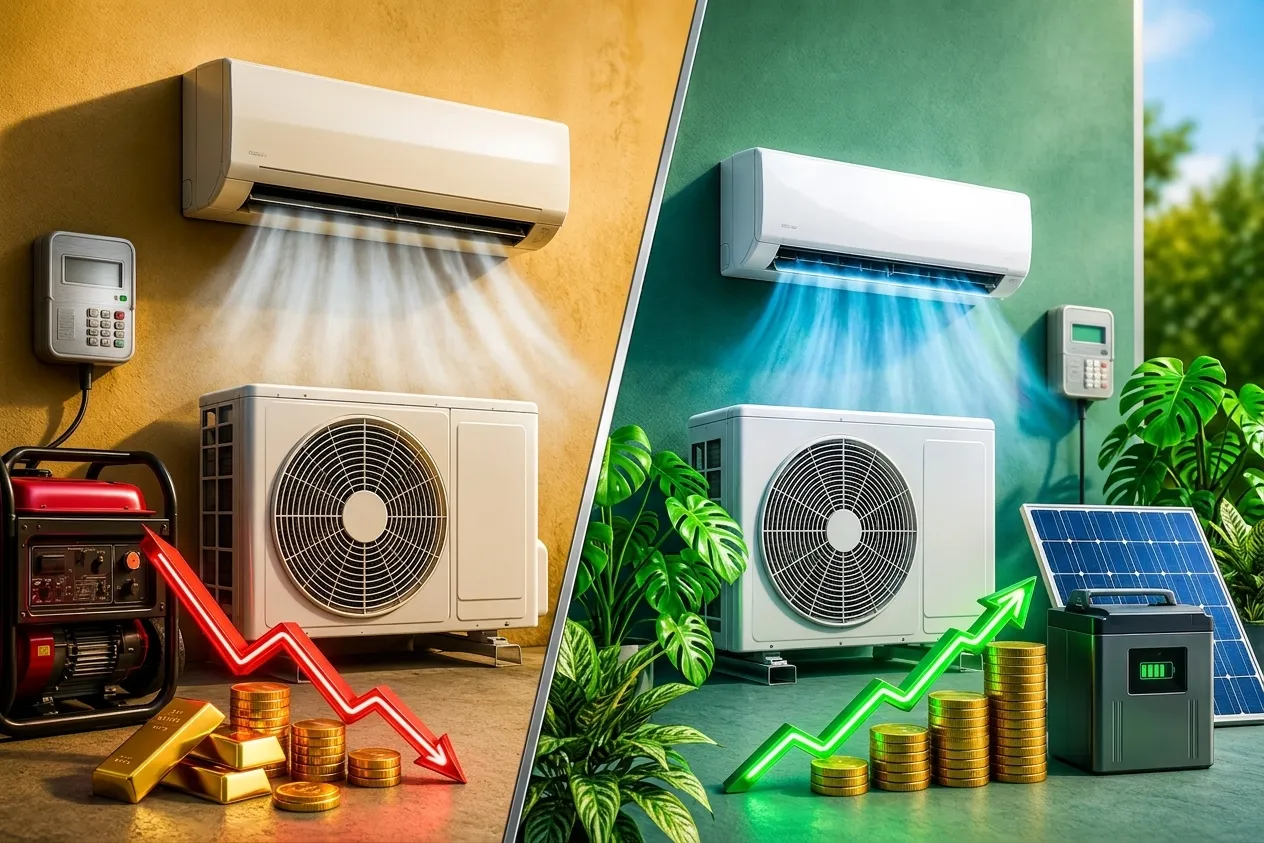
Many Nigerians rely on generators, solar systems, or hybrid power solutions. This is where inverter ACs often provide an additional advantage. Because inverter compressors start more gradually and can operate at lower power levels, they are generally easier to run on:
- Smaller generators
- Solar inverter systems
- Battery-powered backup systems
However, generator requirements vary by brand and AC capacity. Always verify the manufacturer's recommended power requirements before purchase.
The Hidden Cost Many Buyers Ignore
One advantage of non-inverter ACs is often overlooked: Repair costs are usually lower. Inverter ACs contain more sophisticated electronics and control boards. When major components fail, repairs can be significantly more expensive than those for conventional units. This does not eliminate the savings advantage of inverter models, but it is an important consideration when calculating long-term ownership costs.
How to Maximise AC Efficiency
Regardless of which type of AC you buy, these simple habits can significantly reduce electricity consumption:
Set a Sensible Temperature
For most Nigerian homes, 23°C to 25°C provides a comfortable balance between cooling and energy efficiency.
Keep Doors and Windows Closed
Air leakage forces the AC to work harder and consume more electricity.
Use Curtains or Blinds
Blocking direct sunlight can noticeably reduce cooling requirements during the day.
Clean Filters Regularly
Dirty filters restrict airflow and increase energy consumption.
Choose the Correct AC Size
An undersized AC will run continuously, while an oversized unit may cycle inefficiently. Proper sizing is critical for both comfort and efficiency.
Protect Against Voltage Fluctuations
Nigeria's power supply can be unpredictable. A quality stabiliser or surge protector can help protect your investment and extend the lifespan of your AC.
So, Which One Should You Buy?
For most Nigerian households, an inverter AC is the better long-term investment. Although the upfront cost is higher, the combination of lower electricity consumption, quieter operation, improved comfort, better generator compatibility, and solar friendliness usually makes it the more economical choice over time. A non-inverter AC may still make sense if:
- Your budget is extremely tight.
- The AC will be used only occasionally.
- You prioritise lower repair costs over long-term energy savings.
However, if you use your air conditioner regularly—especially daily—the inverter model will typically deliver substantial savings throughout its lifespan.
Finally
If you can afford the higher initial purchase price, choose an inverter AC. For households dealing with expensive prepaid electricity tariffs, generator fuel costs, or solar power limitations, an inverter AC is often one of the smartest energy-efficiency upgrades you can make.